RTI launches ICP control processors with Integration Designer 12
Three new processors cover single-room to large-scale installations, while Integration Designer 12 adds programming tools and remains free of licence, subscription and per-project software charges.

By Eleanor Voss ·
Editor-in-Chief
RTI has released three ICP control processors and Integration Designer 12 for residential and commercial integrators. The hardware covers installations from individual rooms to large systems, while the software adds more than 200 changes. Integrators adopting the processors must use the new programming release, which retains RTI’s software model without licence, subscription or per-project charges.
Key facts
- The new processor range comprises the ICP-2, ICP-4 and rack-mountable ICP-10.
- Integration Designer 12 is required to programme the new ICP hardware.
- All three processors share the same processing engine.
- The ICP-4 supports connections to two separate networks.
- Integration Designer 12 introduces more than 200 features and improvements.
- The processors and programming software are available now.
What happened
RTI has introduced the ICP-2, ICP-4 and ICP-10 Intelligent Control Processors together with Integration Designer 12, updating both the hardware and programming sides of its control platform. The release addresses residential and commercial integrators, with processor options intended for installations ranging from a single room to more extensive control systems.
The software release brings more than 200 additions and improvements across features and programming workflows. Its relationship with the hardware is a firm compatibility requirement: Integration Designer 12 is the only version of RTI’s programming software that supports the new processors. Adopting an ICP model therefore also means adopting this software release.
RTI has retained its existing charging approach for the programming platform. Integration Designer 12 carries neither a software licence charge nor a subscription, and the company does not impose a software fee for each project. That commitment applies to the programming software; it is not a statement that the processor hardware or installation work is free.
The background
RTI said it developed the processors and software together, with an upgrade route for older installations among its objectives. The company also identified increasingly complex control requirements as a reason for the combined release. Its stated approach connects future expansion with work on existing systems, rather than presenting the range solely as hardware for new installations.
The three processors retain support for RTI drivers and several established control connections. Across the range, integrators have infrared control, relays, RS-232, sense inputs and network connectivity. Those shared interfaces provide a common starting point for selecting a processor, before considering the additional connections and network arrangements available on individual models.
The launch sits within the control-platform coverage followed by this publication, including Crestron Home’s native Multiview support and WyreStorm’s Netio power-management integration. RTI’s announcement concerns both the processors executing control functions and the software used to build projects, making the programming requirement part of the hardware decision.
How the three processors differ
The ICP-2 serves single-room projects and smaller installations, but RTI has given it the same processing engine as the larger units. Its entry-level position therefore does not indicate a different engine within this range. The distinctions described by the manufacturer instead include installation format, connectivity and the intended scale of the project.
Built-in Wi-Fi and a two-port Ethernet switch form part of the ICP-2’s network provision. RTI has also placed its connections on one side of the enclosure. The company designed that arrangement for locations with limited space, including behind a display, where the physical position of connectors matters alongside the available control interfaces.
The ICP-4 addresses medium-sized and larger residential installations. It provides separate network interface cards that can either function together as one switch or connect to two distinct networks. RTI says the latter arrangement allows integrators to keep parts of an installation on separate networks when the system design calls for that separation.
Onboard ICP-4 connections include USB as well as infrared, relay outputs, sense inputs and RS-232. It also supplies RS-485, an interface shared with the ICP-10 but not listed for the ICP-2. For processor selection, RS-485 is consequently one of the specified differences between the smallest model and the two larger options.
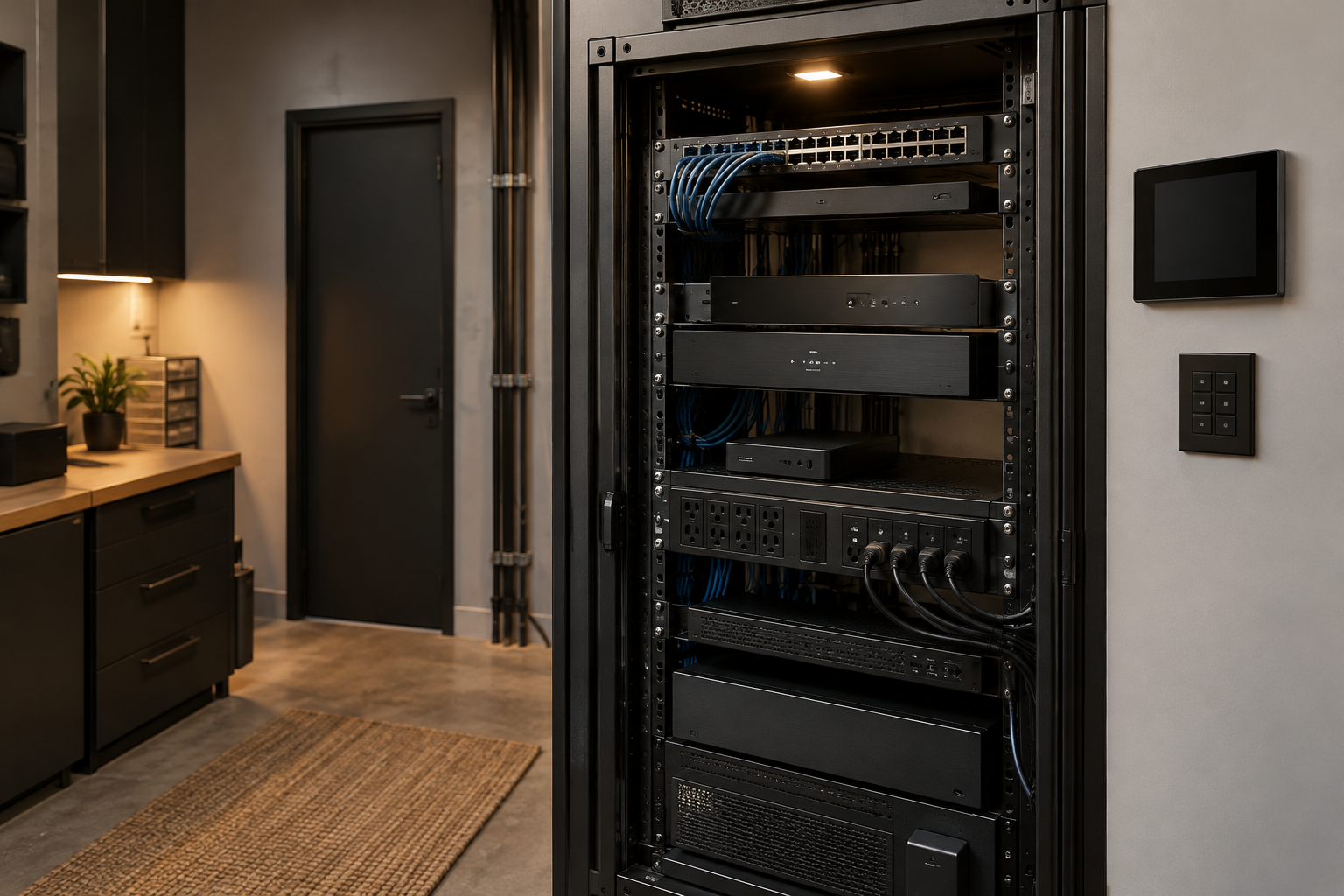
The ICP-10 occupies 1U of rack space and targets large installations, including systems that run more demanding drivers. Expansion is not limited to choosing this top model: RTI also supports combining multiple ICP processors when a project needs additional capacity. The range therefore offers both a larger individual processor and a multi-processor approach.
What changes in interface programming
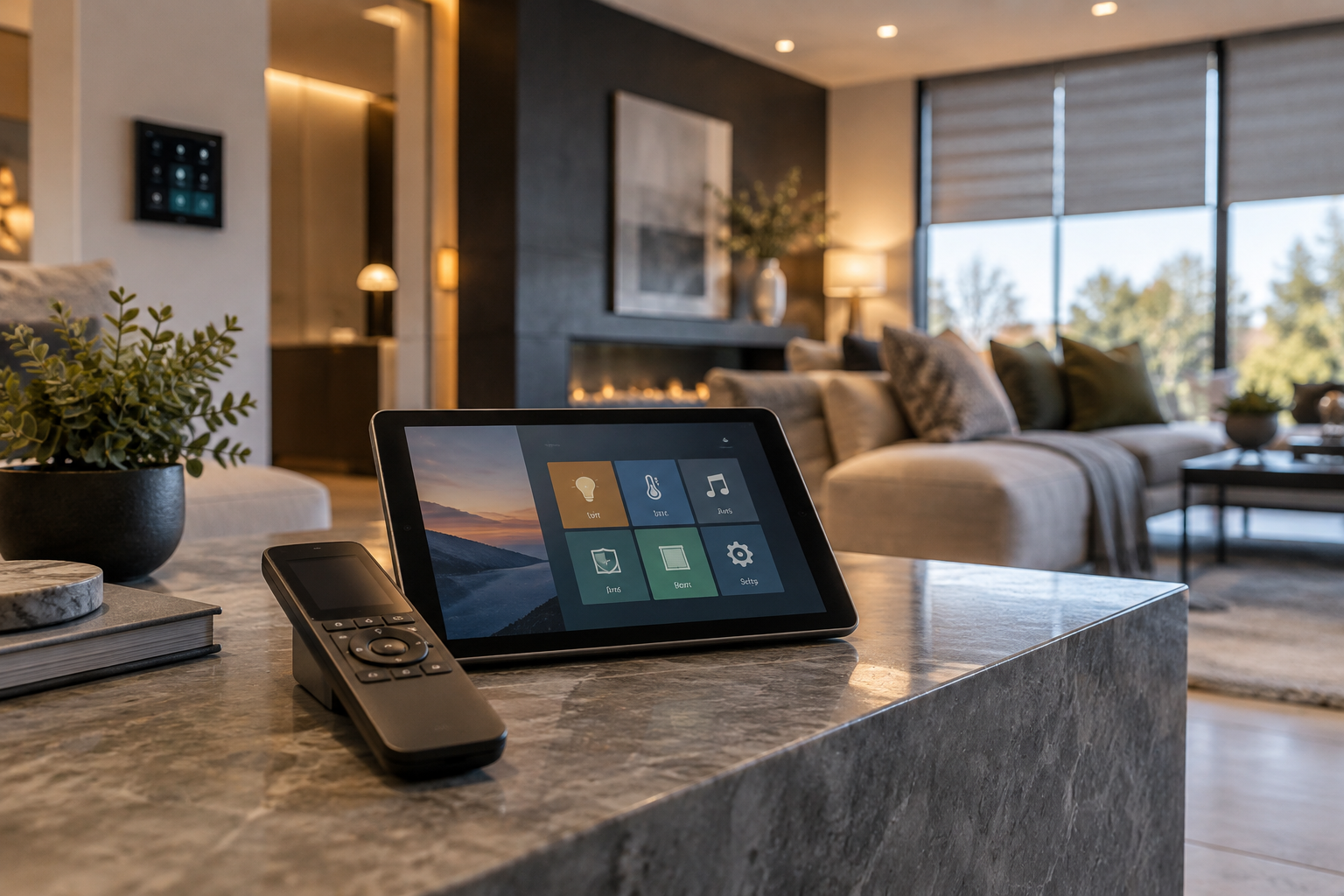
Integration Designer 12 gives integrators a customisable environment for creating control interfaces, while also supplying built-in templates. The templates offer a starting point for deploying projects more quickly, according to RTI. Their inclusion sits alongside bespoke interface design rather than replacing it, leaving both approaches available within the same programming platform.
The customisation options extend to graphics and logos, the arrangement of pages, individual buttons and interface backgrounds. Those are the specific elements RTI identifies as adaptable for a project. The release therefore covers both the visual presentation of an interface and the pages and controls through which a client accesses the programmed system.
Once completed, interfaces can run on RTI control panels and remotes, as well as phones, tablets and PCs. RTI states no ceiling on the number of client devices within a project. That device-count position concerns the endpoints accessing the interface; it should not be read as a claim of unlimited processor capacity or installation size.
The programming environment also adds guidance and tips intended to shorten configuration work. These sit within the broader package of more than 200 feature and workflow changes, rather than representing a separate programming product. RTI’s stated focus includes the work of setting up a project as well as the interface ultimately delivered to the client.
What people are saying
RTI presents scalability as a central purpose of the combined launch. The manufacturer says the hardware and software should help integrators increase the scope of a system while continuing to create individually tailored controls. This is the company’s intended outcome for the platform, rather than a measured result from an independently assessed installation.
The company also puts existing installations within the scope of the release, saying the new products are intended to make upgrades easier. That positioning is relevant to integrators maintaining an installed customer base. It does not, by itself, establish that every older RTI project can transfer unchanged, or that all previous hardware supports the new software.
On programming efficiency, RTI points to templates, guidance and workflow improvements rather than a stated reduction in labour hours. The distinction matters when assessing the release: the manufacturer describes tools intended to reduce configuration time, but the announcement does not attach a quantified time saving to a typical residential or commercial project.
What happens next
The ICP-2, ICP-4 and ICP-10, together with Integration Designer 12, were available at the time of the 20 October 2026 announcement. RTI presented the products as a current release rather than a preview with a later shipping window. Integrators can therefore assess the hardware and its required programming environment as one available platform.
For a project moving to ICP hardware, the first software dependency is clear: an earlier Integration Designer version will not support these processors. That requirement should remain distinct from RTI’s broader migration message. The announcement establishes which programming release the new hardware needs, without setting out a detailed transfer procedure for older installations.
Hardware selection then centres on the installation requirements RTI has identified: confined-space placement for the ICP-2, separate network connections on the ICP-4, or rack mounting and demanding driver workloads for the ICP-10. Where one processor does not provide the required capacity, the announced ability to combine ICP units supplies a further expansion option.
Why this matters
For integrators, the launch ties processor selection directly to a programming-platform update. The shared engine, differing connection options and multi-processor support give dealers several ways to match hardware to an installation, while the software retains custom interface design without recurring or per-project software charges. Clients can access those interfaces through dedicated RTI controls or general-purpose devices. Existing-system upgrades remain a stated priority, although RTI’s migration positioning should not be treated as a blanket compatibility guarantee.
Frequently asked questions
- What are RTI’s new ICP processors?
- RTI has launched the ICP-2, ICP-4 and ICP-10 Intelligent Control Processors. They cover smaller installations, medium-to-large residential projects and large-scale systems respectively.
- Do RTI ICP processors need Integration Designer 12?
- Yes. Integration Designer 12 is the only RTI programming software version that supports the new ICP processors.
- Does Integration Designer 12 have a subscription fee?
- No. RTI says Integration Designer 12 has no software licence fees, subscriptions or per-project software charges.
- What connections does the RTI ICP-2 have?
- The ICP-2 includes Wi-Fi, a two-port Ethernet switch, infrared control, relays, RS-232 and sense inputs. Its connectors sit on one side of the chassis for installation in confined spaces.
- Can the RTI ICP-4 connect to two networks?
- Yes. Its separate network interface cards can operate together as a switch or connect to two separate networks, allowing parts of an installation to be isolated.
- Can multiple RTI ICP processors work together?
- Yes. RTI says multiple ICP processors can be combined when an installation needs more capacity or room for expansion.
- Which devices can run Integration Designer 12 interfaces?
- Completed interfaces can run on RTI panels and remotes, phones, tablets and PCs. RTI states no limit on the number of client devices within a project.
- When are the RTI ICP processors available?
- All three processors and Integration Designer 12 were available at the time of the 20 October 2026 announcement.