Crestron Home adds native Multiview for six video sources
The OS 3.12 update brings decoder-based video layouts into Configure Pro, allowing dealers to configure multi-source viewing on a single display without writing custom code.

By Eleanor Voss ·
Editor-in-Chief
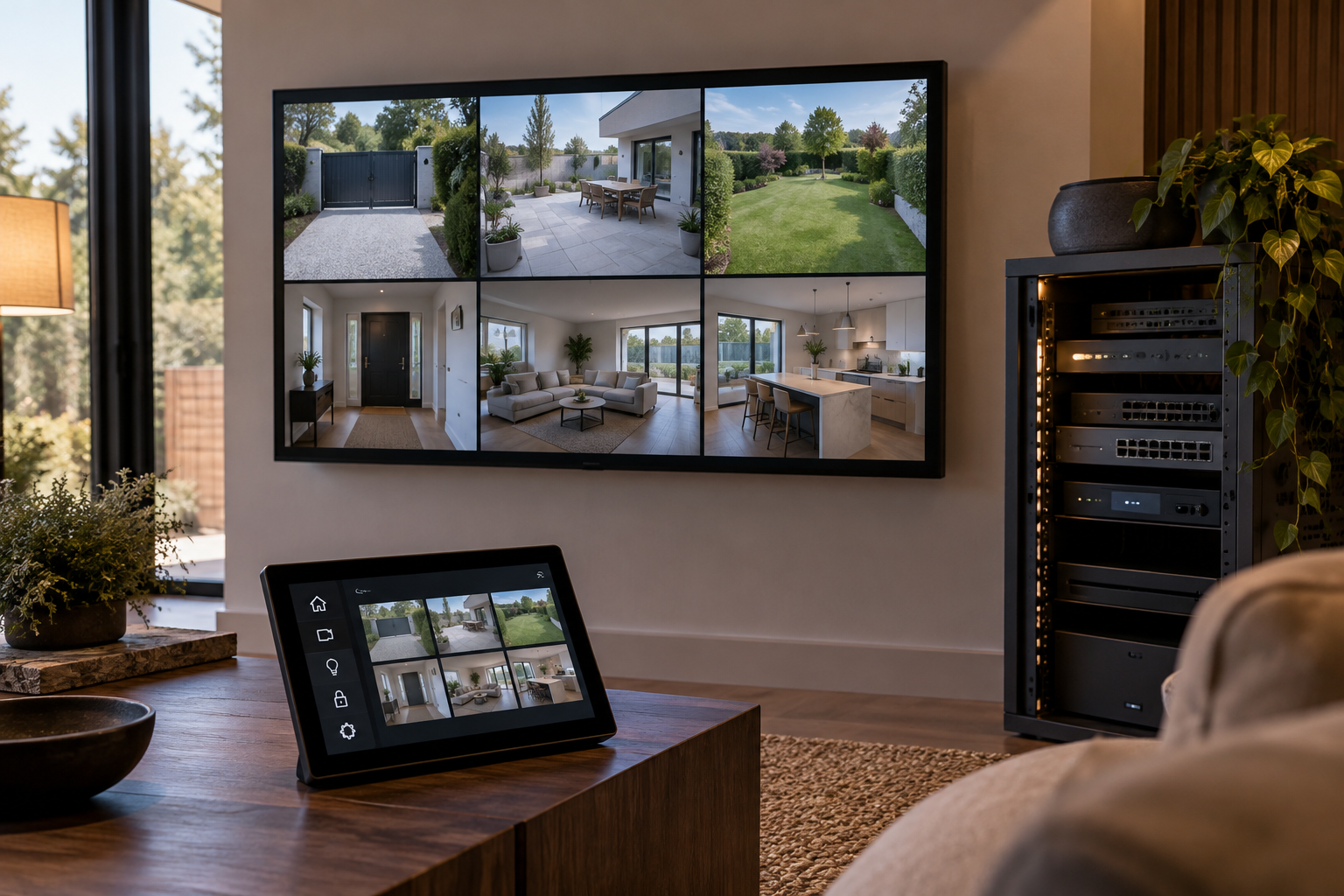
Crestron has brought Multiview into Crestron Home OS 3.12, enabling up to six video sources to share one display through the DM NVX 384 decoder. Dealers can configure the feature without custom programming and save up to 18 viewing compositions, giving residential projects native controls for applications including sports viewing and security monitoring.
Key facts
- Crestron Home OS 3.12 introduces native Multiview through Configure Pro.
- The DM NVX 384 decoder composes up to six simultaneous video sources.
- Available layouts include picture-in-picture, side-by-side and quad view.
- Dealers can configure and recall up to 18 viewing compositions.
- Crestron says deployment requires no custom programming.
- The DM NVX platform also supports scalable audio switching across larger residential installations.
What happened
Crestron has added native Multiview to Crestron Home through its OS 3.12 update, bringing simultaneous viewing of several video sources into the residential control platform. Reported on 28 September 2026, the addition allows an integrator to put those sources together on one display rather than present only one source at a time. The announcement concerns integration into Home, rather than the first appearance of Multiview within Crestron’s wider product range.
Dealers configure the capability in Configure Pro. According to Crestron, that process does not require custom programming, placing the multi-source viewing function within the platform’s configuration tools. This is the principal deployment change described in the announcement: the manufacturer is offering a native route to the feature, rather than asking dealers to develop a bespoke implementation for each Crestron Home installation.
The DM NVX 384 decoder handles the video composition. It assembles sources into preset arrangements that users can recall immediately for different viewing applications, according to the manufacturer. The decoder is therefore a named component of the implementation, not merely background infrastructure. Although the feature arrives through an operating-system update, Crestron describes it in conjunction with this specific piece of DM NVX hardware.
The maximum is six video sources shown at once, with those sources presented in fixed layouts. That limit describes the number of simultaneous sources, not the number of saved arrangements available to the dealer. Crestron’s description distinguishes the dynamic composition of source material from the layout itself: video is brought together within presets, rather than through a stated facility for freely positioning individual windows.
The background
Multiview began as a capability of Crestron’s DM NVX AV-over-IP platform before the company incorporated it into Crestron Home. The update therefore connects an existing video function with the manufacturer’s residential control environment. That history matters when assessing what has changed: the new element is native Home support and its configuration route, rather than an announcement that DM NVX can combine video sources for the first time.
The specified viewing formats include picture-in-picture, a side-by-side arrangement and quad view. These give dealers several ways to divide the display, alongside the stated ceiling of six simultaneous sources. Crestron does not detail every supported layout in the announcement, so the named examples should not be read as a complete list of arrangements or as an explanation of how each six-source composition appears on screen.
Crestron identifies sports viewing and monitoring security feeds as applications for the feature. Both use the same underlying ability to keep several sources visible on a single display, with preset compositions recalled to suit the task. The announcement does not identify particular sports services, cameras or security platforms. Its stated scope is the presentation and control of video sources, rather than new compatibility with any named content or surveillance service.
The story sits alongside other residential-control developments covered in our reporting on Apple’s HomeView hub and Apple TV 4K, while dealer skills remain a separate subject in our coverage of the CEDIA Foundation’s five-country scholarship. Here, Crestron’s specific claim concerns removal of custom programming from Multiview deployment; it does not describe the update as removing the integrator’s configuration role.
What people are saying
Michael Short, Crestron’s vice-president of marketing operations and residential, attributed the addition to demand from both the channel and end users. “Dealers and their clients have been asking for this feature,” he said. His comments position the Home integration as a response to requests for multi-source viewing within the platform, although the announcement provides no figures for dealer requests, customer demand or anticipated adoption.
Short contrasted the native implementation with conventional approaches, which he said can require additional displays or video-processing hardware as well as extensive bespoke programming to achieve a comparable result. That comparison is Crestron’s assessment of deployment complexity. The company did not provide a cost comparison, installation-time measurement or itemised alternative system against which dealers could quantify the claimed reduction in equipment and programming work.
Short also presented Multiview as part of a wider effort to develop video capabilities across Crestron Home. The announcement does not name further products or give a schedule for that broader work. His comments establish the company’s stated direction, while the concrete change described here remains the arrival of native Multiview in OS 3.12, supported by Configure Pro and the DM NVX 384 decoder.
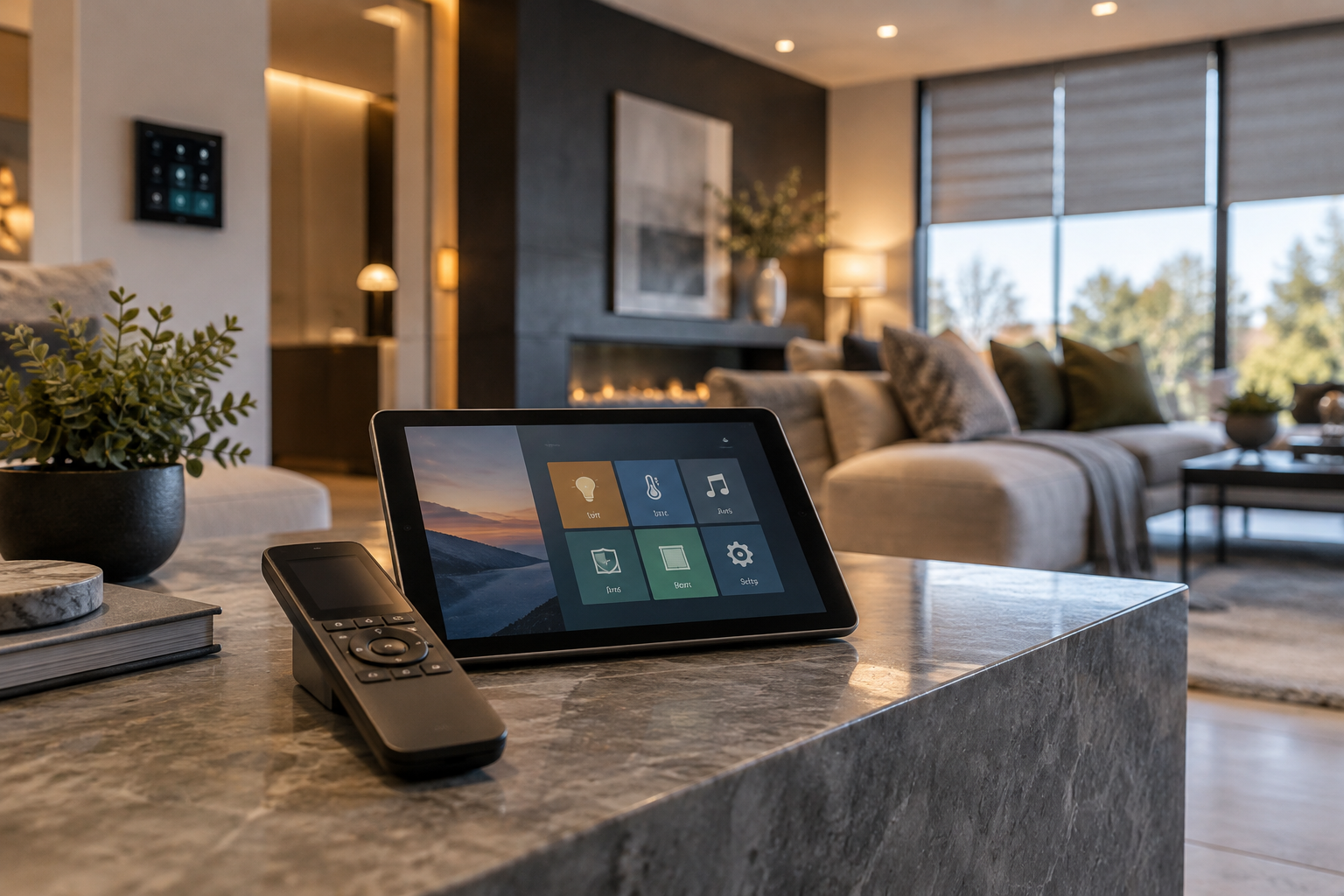
On operation, Short highlighted an on-screen icon that identifies the selected audio and a virtual remote within the control interface. He described the controls as straightforward and the remote as taking an appropriate share of the control screen. Those are the manufacturer’s usability judgements rather than findings from an independent assessment; the specific interface details disclosed are the audio-selection indicator and the on-screen remote.
What happens next
Dealers can create and recall up to 18 viewing compositions. This gives the configuration process a second numerical limit alongside the six-source viewing ceiling: one governs saved compositions, while the other governs how many sources can appear simultaneously. Crestron says presets can be recalled immediately, allowing an installation to retain different compositions rather than requiring the same source arrangement for every viewing application.
Audio is also part of the deployment scope. Running on the DM NVX AV-over-IP platform, Multiview supports audio switching that Crestron describes as scalable across larger residential installations. That extends the announcement beyond arranging pictures on a display. However, the company does not specify an audio-zone maximum or provide further routing details, so the stated scalability should not be converted into an unsupported project-size or capacity claim.
The feature is described as available within the OS 3.12 update, rather than as a future development with a separate launch date. The report’s 28 September 2026 publication date is not identified as the software’s release date. No pricing, regional rollout schedule or additional licensing terms are supplied, leaving those commercial details outside the information provided for dealers assessing the announced capability.
For project planning, the disclosed combination is Crestron Home OS 3.12, Configure Pro and the DM NVX 384 decoder. The announcement does not include a wider decoder compatibility list or a detailed upgrade procedure for existing installations. Its no-custom-programming claim should therefore be understood within that stated configuration, not treated as evidence that every installed Home system can gain Multiview through software alone.
Why this matters
For integrators, the practical change is a native configuration route for multi-source viewing, with Crestron saying bespoke programming is unnecessary. Clients can use saved compositions for sports or security monitoring on one display. The six-source ceiling, 18-composition limit and specified DM NVX 384 decoder give dealers concrete parameters for project discussions. The announcement does not quantify installation savings or disclose pricing, so those points remain separate from the manufacturer’s claims about simpler deployment.
Frequently asked questions
- What does Crestron Home Multiview do?
- It combines several video sources on one display within Crestron Home. Applications identified by Crestron include watching sports and monitoring security feeds.
- How many sources can Crestron Home Multiview show?
- Multiview supports up to six simultaneous video sources in fixed layouts.
- Which decoder does Crestron Home Multiview use?
- The announced implementation uses the DM NVX 384 decoder to compose the video sources.
- Does Crestron Home Multiview need custom programming?
- Crestron says no custom programming is required. Dealers configure the native feature through Configure Pro as part of Crestron Home OS 3.12.
- What layouts are available in Crestron Home Multiview?
- Crestron names picture-in-picture, side-by-side and quad view. The announcement also specifies support for up to six simultaneous sources, but does not detail every layout.
- How many Multiview compositions can dealers save?
- Dealers can create and recall up to 18 viewing compositions.
- How does audio selection work in Crestron Home Multiview?
- An on-screen icon identifies the selected audio, and the interface includes a virtual remote. Crestron also says the DM NVX platform supports scalable audio switching across larger residential installations.
- When is Crestron Home Multiview available?
- The feature was reported as available in Crestron Home OS 3.12 on 28 September 2026. The announcement does not give a separate software release date or regional rollout schedule.